Cedar Rapids Depression Treatment Center
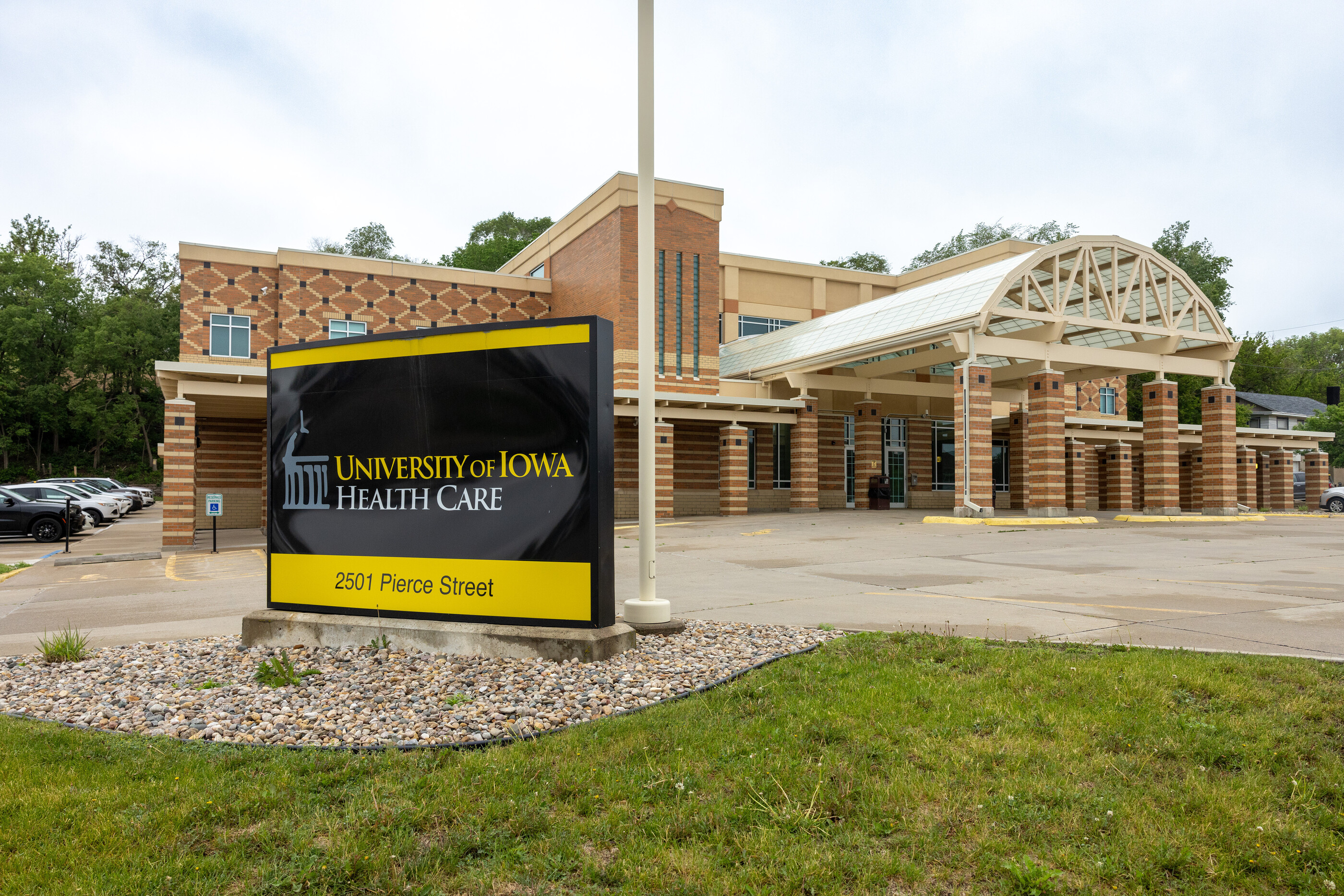
Cedar Rapids, IA
Technology NeuroStar
Insurance accepted Tricare, Medicare, Kaiser Permanente + more
"Patients highlight advanced NeuroStar technology and thorough consultations."
Answer a few questions to find out if TMS therapy could work for you.
24 FDA-cleared and researched protocols
Most Searched
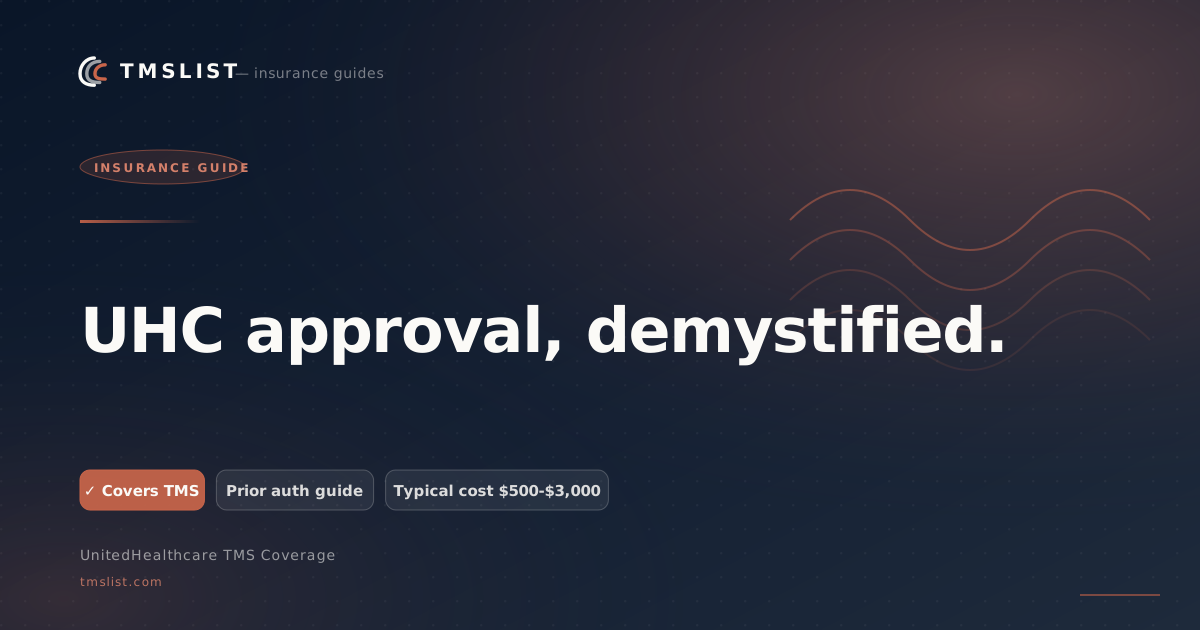
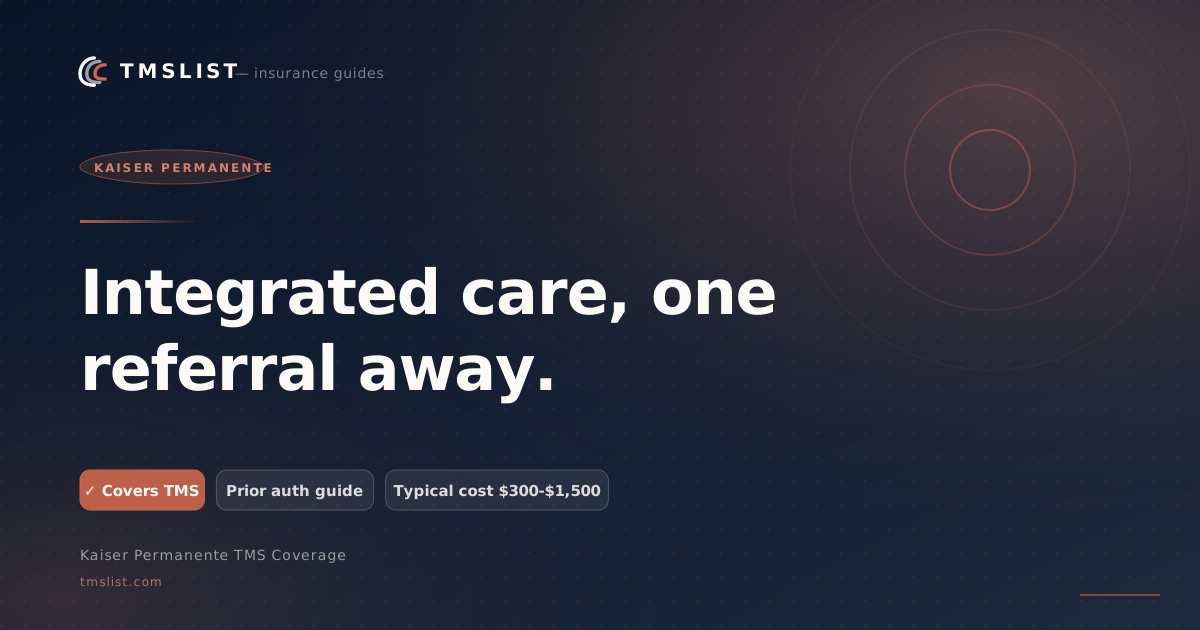
25 provider-specific guides to help you understand coverage
Most insurance plans cover FDA-cleared TMS for major depression.
Use Cost CalculatorSee how NeuroStar, BrainsWay, and other systems stack up.
Get featured, collect reviews, and attract more patients seeking TMS therapy near you.
Compare 9 top-rated TMS therapy providers across 4 cities in Iowa. Read patient reviews, check insurance coverage, and find treatment near you.
Cedar Rapids, IA
Technology NeuroStar
Insurance accepted Tricare, Medicare, Kaiser Permanente + more
"Patients highlight advanced NeuroStar technology and thorough consultations."
Davenport, IA
Technology CloudTMS, Nexstim
Insurance accepted Medicaid, Cigna, Tricare + more
"Patients praise the data-driven CloudTMS monitoring and professional care team."
Davenport, IA
Technology MagVenture, Nexstim
Insurance accepted Kaiser Permanente, Medicare, Cigna
"Known for precise MagVenture protocols with consistently positive outcomes."
Cedar Rapids, IA
Technology NeuroStar
Insurance accepted Tricare, Medicare, Kaiser Permanente + more
"Patients highlight advanced NeuroStar technology and thorough consultations."
Davenport, IA
Technology CloudTMS, Nexstim
Insurance accepted Medicaid, Cigna, Tricare + more
"Patients praise the data-driven CloudTMS monitoring and professional care team."
Davenport, IA
Technology MagVenture, Nexstim
Insurance accepted Kaiser Permanente, Medicare, Cigna
"Known for precise MagVenture protocols with consistently positive outcomes."
Sioux City, IA
Technology BrainsWay
Insurance accepted Kaiser Permanente, Aetna, Medicaid + more
"Top marks for deep TMS with BrainsWay and welcoming environment."
Cedar Rapids, IA
Technology MagVenture, Magstim
Insurance accepted Medicare, Cigna, Tricare
"Highly rated for precise MagVenture protocols and compassionate staff."
Cedar Rapids, IA
Technology Nexstim
Insurance accepted Cigna, Tricare, Kaiser Permanente + more
"Patients appreciate the targeted Nexstim navigation and follow-up care."
Des Moines, IA
Technology Nexstim, CloudTMS, MagVenture
Insurance accepted BlueCross, Medicare, Medicaid + more
"Valued for targeted Nexstim navigation and clear communication throughout treatment."
Sioux City, IA
Technology Nexstim, NeuroStar, CloudTMS
Insurance accepted Kaiser Permanente, Aetna, UnitedHealthcare + more
"Valued for targeted Nexstim navigation and clear communication throughout treatment."
Davenport, IA
Technology NeuroStar, Nexstim
Insurance accepted Aetna, Tricare, UnitedHealthcare + more
"Known for advanced NeuroStar technology with consistently positive outcomes."
From how TMS works to insurance coverage, costs, and what to expect — here's a comprehensive guide to finding TMS therapy in Iowa.
Transcranial Magnetic Stimulation (TMS) is a non-invasive, FDA/NICE/Health Canada/TGA-cleared treatment that uses focused magnetic pulses to stimulate underactive regions of the brain linked to depression and other mental health conditions. Unlike electroconvulsive therapy (ECT), TMS requires no anaesthesia, no surgery, and causes no memory impairment.
In Iowa, there are 9 verified TMS clinics offering this treatment. A full course typically consists of 20–40 sessions, delivered 5 days a week over 6–8 weeks. Each session lasts approximately 20–40 minutes, and patients typically resume normal activities immediately afterward.
TMS is primarily used for treatment-resistant depression but has expanding clinical applications. In Iowa, clinics offer TMS for:
FDA-cleared for major depressive disorder (MDD), obsessive-compulsive disorder (OCD), and smoking cessation, with coverage expanding for anxiety and PTSD. Medicare, BlueCross BlueShield, Aetna, Cigna, and UnitedHealthcare typically cover TMS when pre-authorised and when standard medication and psychotherapy have not provided adequate relief.
The three main TMS devices are FDA/NICE/Health Canada/TGA-cleared and available at clinics in Iowa. Each uses a different coil design and stimulation protocol:
The most widely used TMS system. Targets the left dorsolateral prefrontal cortex (DLPFC) for depression. Standard protocol: 37.5 min sessions, 5x/week for 6 weeks.
Uses an H-shaped coil that penetrates deeper and broader brain regions. Cleared for depression and OCD. May be effective for patients who did not respond to standard rTMS.
Offers both standard and accelerated Theta Burst protocols. TBS can reduce session time to 3–6 minutes with comparable efficacy to standard 37.5-minute sessions.