Does Medicaid cover TMS?
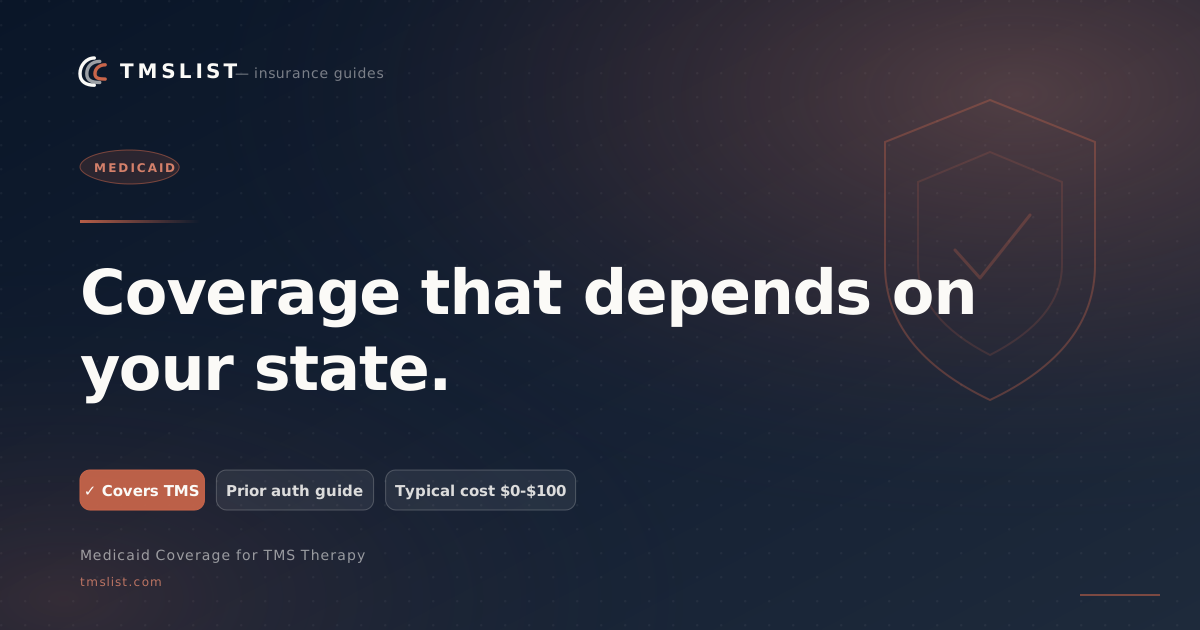
It depends on your state. That’s the honest answer.
Unlike Medicare, which has a national policy, Medicaid is run state by state. Each state decides for itself whether to cover TMS. As of 2026, a growing number of state Medicaid programs do cover TMS for treatment-resistant depression — but it’s far from universal.
States with Medicaid TMS coverage
These states currently offer TMS through their Medicaid programs (this list isn’t exhaustive — check your state directly):
- California (Medi-Cal): Covers TMS with prior authorization after 2+ medication failures
- New York: Covers TMS for treatment-resistant depression
- Texas: Limited coverage with extensive documentation requirements
- Florida: Covered through some managed care plans
- Illinois: Covers TMS with prior authorization
- Ohio: Covers through managed care organizations
Policies change. Your best move is to call your state Medicaid office or managed care plan for the latest info.
Typical eligibility requirements
When states do cover TMS, they generally want to see:
- MDD diagnosis confirmed by a psychiatrist
- 2-4 failed antidepressant trials at real doses for adequate duration (usually 6-8 weeks each)
- Clinical records showing every medication trial — dates, doses, why it didn’t work
- Prior authorization — required in virtually every state
- Licensed provider at an approved facility
How to get authorization
- Confirm your plan covers TMS. Call the number on your Medicaid card. Ask specifically about TMS for depression
- Get a referral. Most Medicaid plans require one from a psychiatrist
- Document your medication history. Your provider should compile records of every prior trial
- Submit prior authorization. Your TMS clinic usually handles this, but stay on top of it — follow up on timelines yourself
- Appeal if denied. Medicaid denials can be appealed. Get the specific reason in writing and address it head-on
Medicaid managed care vs fee-for-service
Many states deliver Medicaid through managed care organizations (MCOs). This matters because your coverage depends on which MCO you’re in:
- MCO plans may have different TMS policies than the state’s fee-for-service Medicaid
- Some MCOs carve out behavioral health to separate companies
- Call your specific plan — not just “Medicaid” — to get a real answer
Cost if Medicaid doesn’t cover TMS
If your state’s Medicaid program won’t cover it, you still have options:
- Ask the TMS clinic about sliding-scale fees or payment plans
- Some clinics participate in manufacturer-sponsored access programs
- Clinical trials offer TMS at no cost — you get treated and contribute to research
- Contact NeuroStar’s patient assistance program
Tips for Medicaid members
- Start early. Medicaid approvals can take 2-4 weeks
- Keep copies of all medication records and psychiatrist notes
- If denied, always appeal. Many initial denials get reversed
- Ask any TMS clinic whether they actually accept Medicaid before you get too far into the process — some don’t
Related Insurance Guides
Ready to Explore Your Options?
Browse verified TMS providers, compare clinics, and find the right treatment for your situation.
How to Get TMS Approved
Call the number on the back of your insurance card and ask specifically about TMS therapy coverage. Get a reference number.
Gather records of your MDD diagnosis, all medication trials (names, doses, durations, outcomes), current PHQ-9 score, and therapy history.
Find an in-network TMS provider using our clinic directory. In-network clinics handle prior auth and know your insurer's requirements.
Your TMS clinic submits the prior auth request. Typical approval takes 5-15 business days. If denied, appeal — overturn rates are 60-70%.
What If You’re Denied?
Don't give up after a denial
TMS denial overturn rates are 60-70% on appeal. Steps to take:
- Request a peer-to-peer review — your psychiatrist talks directly to the insurer's medical director
- Submit additional documentation addressing the specific denial reason
- File a formal appeal with your state insurance department if internal appeals fail
- External review — most states allow independent external review of coverage denials
For more details, see our Prior Authorization Guide and Denied Coverage Appeals guide.
Medicaid TMS Coverage: What You Need to Know
Explore TMS List
Treatments & Conditions
Insurance & Cost
-
 Kaiser Permanente Coverage
 -
 Humana TMS Coverage
 -
 Medicare Coverage for TMS
 - TMS Cost Guide
- TMS Cost Calculator
TMS Specialists
- Megan Miller — Fort Lauderdale, FL
- Patricia Frischtak — Washington, DC
- Balamoorti Gaonkar — Naperville, IL
- Dr. Saad Shakir, MD — San Jose, CA